
Radiography & Ultrasonography
Advanced diagnostic imaging to help us quickly and accurately diagnose your pet's condition.
Many illnesses and injuries cannot be diagnosed through a physical examination alone. Diagnostic imaging allows our veterinarians to look inside your pet's body, helping us identify problems, confirm diagnoses and develop the most appropriate treatment plan.
Our hospital is equipped with modern digital radiography (X-ray) and ultrasound technology, with access to visiting ultrasound specialists for more complex cases when required.
Diagnostic imaging at our hospital
Our veterinarians will recommend the most appropriate imaging based on your pet's symptoms and examination findings.
Diagnostic imaging helps us investigate problems involving:
Broken bones and joint injuries
Lameness
Arthritis
Chest and lung disease
Heart disease
Abdominal pain
Vomiting or diarrhoea
Bladder stones
Pregnancy
Internal masses
Foreign body ingestion
Many other medical conditions
Often, diagnostic imaging is combined with blood tests or other laboratory testing to build a complete picture of your pet's health.
Digital Radiography (X-rays)
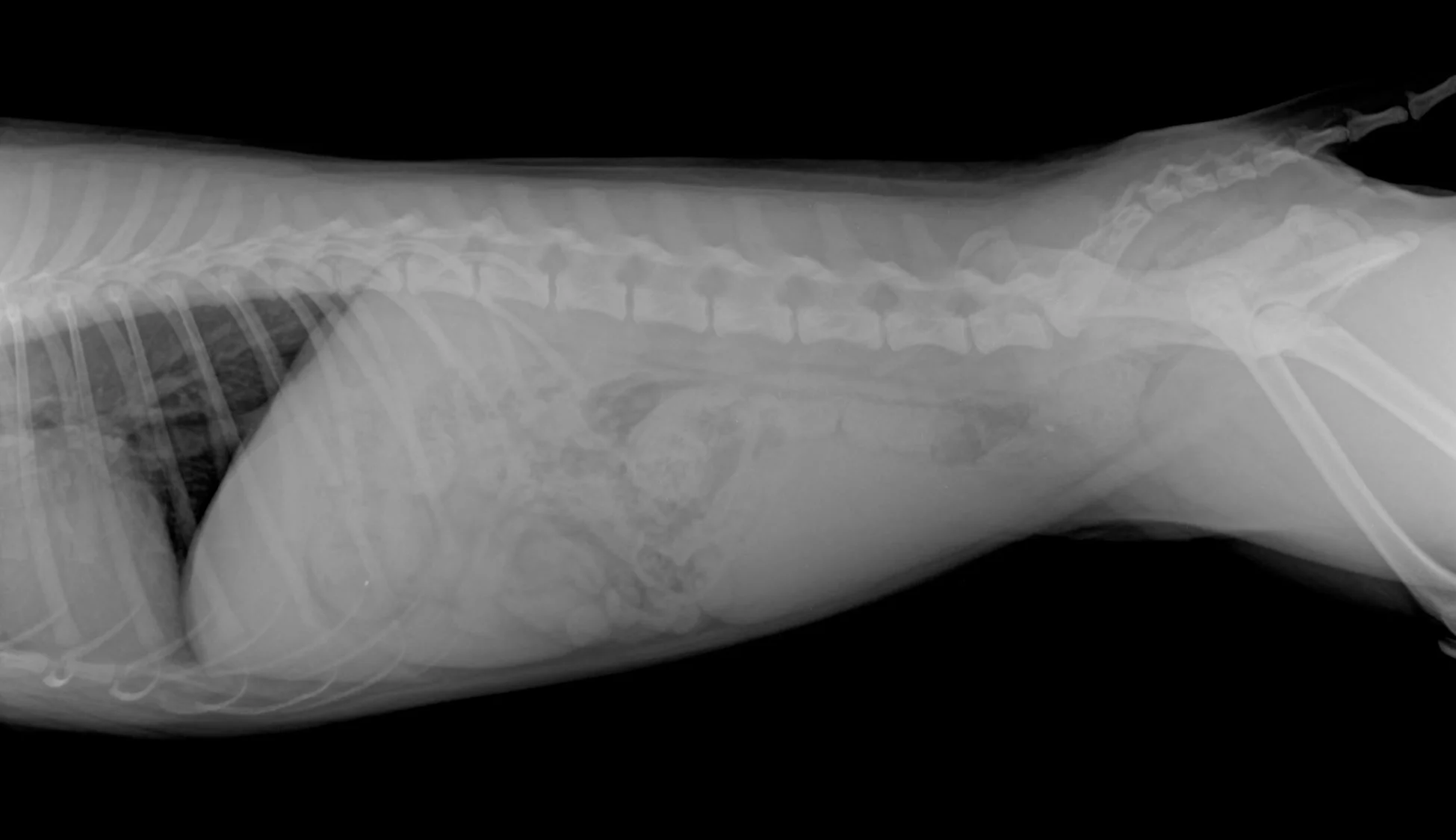
Digital X-rays provide detailed images of structures inside your pet's body within seconds.
They are particularly useful for assessing:
Bones and fractures
Arthritis and joint disease
The chest and lungs
The heart
The abdomen
Bladder stones
Certain foreign bodies
Because images are available immediately, our veterinarians can begin interpreting the results without waiting for films to be developed.
Our digital imaging system also allows images to be enlarged, adjusted and securely shared with specialists when additional expertise is required.
Ultrasonography (Ultrasound)
Ultrasound uses harmless sound waves to create real-time images of internal organs.
Unlike X-rays, ultrasound is particularly useful for examining soft tissues, including:
Liver
Kidneys
Bladder
Spleen
Gastrointestinal tract
Reproductive organs
The heart (when indicated)
Ultrasound allows us to evaluate organ structure, identify abnormalities and, in some cases, guide the collection of fluid or tissue samples.
For complex examinations, we work with a visiting ultrasound specialist to provide additional expertise when appropriate.
Why might my pet need sedation or anaesthesia?
One of the most common questions owners ask is why their pet may need sedation or a general anaesthetic for imaging.
Unlike people, pets don't understand the need to remain perfectly still or lie in unusual positions while images are taken.
Even small movements can blur an image and reduce its diagnostic value.
Depending on the examination being performed and your pet's temperament, we may recommend:
No sedation
Light sedation
General anaesthesia
Our veterinarians will discuss the safest and most appropriate option for your pet before any procedure.
What happens on the day?
Most pets having planned imaging procedures are admitted to hospital for part of the day.
Typically, the process includes:
Admission and examination by one of our veterinarians.
Imaging performed once your pet is prepared.
Review and interpretation of the images.
Discussion of the findings and recommended treatment plan.
Discharge home when appropriate.
For some procedures, we ask that pets arrive having had no breakfast, particularly if sedation or anaesthesia may be required. We'll provide specific instructions when your appointment is booked.
Frequently Asked Questions
Will my pet need to stay all day?
Many diagnostic imaging procedures are performed as day admissions. Depending on the urgency and complexity of the case, some pets may be able to return home later the same day.
Is ultrasound painful?
No. Ultrasound is a painless, non-invasive procedure. Your pet may have a small area of hair clipped to allow good contact between the probe and the skin.
Are X-rays safe?
Yes. Digital radiography uses carefully controlled doses of radiation. We follow strict safety protocols for both our patients and our team.
Will I get to see the images?
Absolutely. Our veterinarians are happy to show you your pet's X-rays or ultrasound images, explain what they demonstrate and discuss the recommended treatment options.
Helping us find answers sooner
Diagnostic imaging is one of the most valuable tools available in modern veterinary medicine.
By combining thorough clinical examinations with digital X-rays, ultrasound and other diagnostic tests, we can diagnose many conditions more accurately and begin appropriate treatment sooner.
If your pet requires diagnostic imaging, our team will guide you through every step of the process and ensure you understand both the findings and the available treatment options.